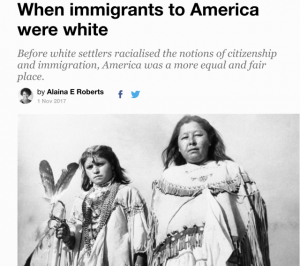
Mankiller, the Cherokee Nation’s first female chief, is one of the most well-known and widely respected Native American figures in the country. But, like all human beings, she’s complicated: She was also an architect of the mass disenrollment of the Black members of her tribe (also known as “Freedmen”) — a position she regretted later in life, and an injustice that has only just been fully remedied under the current Cherokee principal chief, Chuck Hoskin, Jr.
African American and Native American history have long been considered kindred by those who cite the original sin of the United States as twofold—the dual Indigenous land and Black labor theft by European settlers. Both groups suffered the losses of language, culture, and freedom... The real history between African Americans and Native Americans is complex and involves various times and places where these peoples joined together or took part in the other’s subjugation—and these complexities shape the ideas Black and Native people have of one another today.

But as is often the case, history is more complex than it seems. Why were there so many African Americans in Tulsa, Oklahoma at the turn of the 20th century? Why were they able to become so successful in a period of time, the late 1800s and early 1900s, known for the collapse of Reconstruction and the rise of Jim Crow?

On May 31, 1921, Buck Colbert Franklin peered up at the Tulsa, Oklahoma, sky and saw planes dropping turpentine bombs onto the roofs of nearby homes and businesses. On the street around him, he watched Black women, men, and children being felled by the guns of their white neighbors. Under the guise of extracting retribution for a Black teenager’s supposed assault on a white woman a day before, white Tulsans strategically destroyed the physical manifestations of their Black neighbors’ success.

Like most African Americans, I come from a family with a history that includes generations of enslavement. But unlike most, the men and women who held my ancestors in bondage were not white, they were Native American—people who were themselves oppressed by the process that led to my family’s freedom.